

Opening Prayers
Blessing, invocation, and the Lord's PrayerIf the Ninth Hour was not said immediately before, the priest opens with the blessing. Otherwise the reader begins at "Come, let us worship" on the next section.
Priest: Blessed is our God always, now and ever and unto ages of ages.
Reader: Amen. Glory to Thee, our God, glory to Thee.
O Heavenly King, the Comforter, the Spirit of truth, Who art everywhere and fillest all things; Treasury of blessings and Giver of life: come and abide in us and cleanse us from every impurity, and save our souls, O Good One.
Holy God, Holy Mighty, Holy Immortal, have mercy on us. (thrice)
Glory to the Father, and to the Son, and to the Holy Spirit, now and ever and unto ages of ages. Amen.
O Most Holy Trinity, have mercy on us. O Lord, cleanse us from our sins. O Master, pardon our transgressions. O Holy One, visit and heal our infirmities, for Thy Name's sake.
Lord, have mercy. (thrice)
Glory to the Father, and to the Son, and to the Holy Spirit, now and ever and unto ages of ages. Amen.
Our Father, Who art in heaven, hallowed be Thy Name; Thy Kingdom come; Thy will be done on earth, as it is in heaven. Give us this day our daily bread, and forgive us our trespasses, as we forgive those who trespass against us; and lead us not into temptation, but deliver us from evil.
Priest: For Thine is the Kingdom, and the power, and the glory of the Father, and of the Son, and of the Holy Spirit, now and ever and unto ages of ages.
Reader: Amen. Lord, have mercy. (12x)
Glory to the Father, and to the Son, and to the Holy Spirit, now and ever and unto ages of ages. Amen.
Vespers is the first service of the liturgical day. In the ancient reckoning, the new day begins at sunset, so Saturday evening Vespers opens the celebration of Sunday, the Day of Resurrection.
Psalm 103
A hymn of creation sung at the door of the eveningCome, let us worship God our King. Come, let us worship and fall down before Christ, our King and our God. Come, let us worship and fall down before Christ Himself, our King and our God.
Bless the Lord, O my soul. O Lord my God, Thou art very great. Thou art clothed with honor and majesty, Who coverest Thyself with light as with a garment, Who hast stretched out the heavens like a tent, Who hast laid the beams of Thy chambers on the waters, Who makest the clouds Thy chariot, Who ridest on the wings of the wind, Who makest the winds Thy messengers, fire and flame Thy ministers.
Thou didst set the earth on its foundations, so that it should never be shaken. Thou didst cover it with the deep as with a garment; the waters stood above the mountains. At Thy rebuke they fled; at the sound of Thy thunder they took to flight. The mountains rose, the valleys sank down to the place which Thou didst appoint for them. Thou didst set a bound which they should not pass, so that they might not again cover the earth.
Thou makest springs gush forth in the valleys; they flow between the hills, they give drink to every beast of the field; the wild asses quench their thirst. By them the birds of the air have their habitation; they sing among the branches. From Thy lofty abode Thou waterest the mountains; the earth is satisfied with the fruit of Thy work.
Thou dost cause the grass to grow for the cattle, and plants for man to cultivate, that he may bring forth food from the earth, and wine to gladden the heart of man, oil to make his face shine, and bread to strengthen man's heart. The trees of the Lord are watered abundantly, the cedars of Lebanon which He planted. In them the birds build their nests; the stork has her home in the fir trees. The high mountains are for the wild goats; the rocks are a refuge for the badgers.
Thou hast made the moon to mark the seasons; the sun knows its time for setting. Thou makest darkness, and it is night, when all the beasts of the forest creep forth. The young lions roar for their prey, seeking their food from God. When the sun rises, they get them away and lie down in their dens. Man goes forth to his work and to his labor until the evening.
O Lord, how manifold are Thy works. In wisdom hast Thou made them all; the earth is full of Thy creatures. Yonder is the sea, great and wide, which teems with things innumerable, living things both small and great. There go the ships, and Leviathan which Thou didst form to sport in it. These all look to Thee, to give them their food in due season. When Thou givest to them, they gather it up; when Thou openest Thy hand, they are filled with good things. When Thou hidest Thy face, they are dismayed; when Thou takest away their breath, they die and return to their dust. When Thou sendest forth Thy Spirit, they are created; and Thou renewest the face of the ground.
May the glory of the Lord endure forever, may the Lord rejoice in His works, Who looks on the earth and it trembles, Who touches the mountains and they smoke. I will sing to the Lord as long as I live; I will sing praise to my God while I have being. May my meditation be pleasing to Him, for I rejoice in the Lord. Let sinners be consumed from the earth, and let the wicked be no more. Bless the Lord, O my soul.
And again:
The sun knows its time for setting. Thou makest darkness, and it is night. O Lord, how manifold are Thy works. In wisdom hast Thou made them all.
Glory to the Father, and to the Son, and to the Holy Spirit, now and ever and unto ages of ages. Amen.
Alleluia, alleluia, alleluia, glory to Thee, O God. (thrice)
Psalm 103 is sung at every Vespers in the Byzantine tradition. It places the entire evening prayer within creation itself, and within time as God governs it. The setting sun is not loss but the gift of rest and the promise of a new day.
The Great Litany
Intercession for the peace of the whole worldDeacon (Priest): In peace, let us pray to the Lord.
R. Lord, have mercy.
For the peace from above and for the salvation of our souls, let us pray to the Lord.
R. Lord, have mercy.
For the peace of the whole world, for the welfare of the holy Churches of God, and for the union of all, let us pray to the Lord.
R. Lord, have mercy.
For this holy house and for those who enter it with faith, reverence, and the fear of God, let us pray to the Lord.
R. Lord, have mercy.
For our Metropolitan N., for our Bishop N., for the honorable priesthood, the diaconate in Christ, and for all the clergy and the people, let us pray to the Lord.
R. Lord, have mercy.
For this country, its President, for all civil authorities, and for the armed forces, let us pray to the Lord.
R. Lord, have mercy.
For this city, for every city and countryside, and for the faithful dwelling in them, let us pray to the Lord.
R. Lord, have mercy.
For seasonable weather, for abundance of the fruits of the earth, and for peaceful times, let us pray to the Lord.
R. Lord, have mercy.
For travelers by land, by sea, and by air; for the sick and the suffering; for captives and their salvation, let us pray to the Lord.
R. Lord, have mercy.
That we may be delivered from all affliction, wrath, danger, and necessity, let us pray to the Lord.
R. Lord, have mercy.
Help us, save us, have mercy on us, and keep us, O God, by Thy grace.
R. Lord, have mercy.
Commemorating our most holy, most pure, most blessed and glorious Lady Theotokos and Ever-virgin Mary with all the saints, let us commend ourselves and each other, and all our life unto Christ our God.
R. To Thee, O Lord.
Priest: For unto Thee are due all glory, honor, and worship: to the Father and to the Son and to the Holy Spirit, now and ever and unto ages of ages.
R. Amen.
The response "Lord, have mercy" in Greek is Kyrie, eleison. It is the oldest continuous prayer of the Church, found in the Psalms, on the lips of the blind man on the road to Jericho, and in every Christian liturgy from the earliest centuries to the present.
The Kathisma
Reading from the PsalterAt Great Vespers, the first section of the first kathisma (Blessed is the man...) is sung by the choir. At Daily Vespers, the appointed kathisma is read. The kathisma is omitted on the eves of great feasts of the Lord, except on Saturday or Sunday evening.
Blessed is the Man
Psalm 1, the opening of the PsalterThe Orthodox Church divides the Psalter into twenty sections called kathismata. The full Psalter is read through each week in the ordinary course of services, twice a week during Great Lent. To pray at Vespers is to join the continuous, unbroken song of the Church that has never stopped singing the Psalms.
At the conclusion of the kathisma, the deacon or priest says the Little Litany:
Deacon (Priest): Again and again in peace, let us pray to the Lord.
R. Lord, have mercy.
Help us, save us, have mercy on us, and keep us, O God, by Thy grace.
R. Lord, have mercy.
Commemorating our most holy, most pure, most blessed and glorious Lady Theotokos and Ever-virgin Mary with all the saints, let us commend ourselves and each other, and all our life unto Christ our God.
R. To Thee, O Lord.
Priest: For Thine is the might, and Thine is the Kingdom and the power and the glory, of the Father and of the Son and of the Holy Spirit, now and ever and unto ages of ages.
R. Amen.
The Psalms are the prayer book of the Old Testament and the backbone of all Orthodox worship. Monks pray the entire Psalter weekly. The faithful at parish services hear large portions of it at every Vespers and Matins throughout the year.
Lord, I Call
upon Thee
The evening psalms and the stichera
Choir: Lord, I call upon Thee, hear me! Hear me, O Lord! Lord, I call upon Thee, hear me! Receive the voice of my prayer, when I call upon Thee! Hear me, O Lord!
Let my prayer arise in Thy sight as incense, and let the lifting up of my hands be an evening sacrifice! Hear me, O Lord!
The reader then chants the verses of Psalms 140, 141, 129, and 116. The stichera are inserted between the verses according to the number appointed for the day.
Psalm 140Set a guard over my mouth, O Lord, keep watch over the door of my lips. Incline not my heart to any evil, to busy myself with wicked deeds in company with men who work iniquity; and let me not eat of their dainties. Let a good man strike or rebuke me in kindness, but let the oil of the wicked never anoint my head; for my prayer is continually against their wicked deeds. When they are given over to those who shall condemn them, then they shall learn that the word of the Lord is true. As a rock which one cleaves and shatters on the land, so shall their bones be strewn at the mouth of Sheol. But my eyes are toward Thee, O Lord God; in Thee I seek refuge; leave me not defenseless. Keep me from the trap which they have laid for me, and from the snares of evildoers. Let the wicked together fall into their own nets, while I escape.
I cry with my voice to the Lord, with my voice I make supplication to the Lord, I pour out my complaint before Him, I tell my trouble before Him. When my spirit is faint, Thou knowest my way. In the path where I walk they have hidden a trap for me. I look to the right and watch, but there is none who takes notice of me; no refuge remains to me, no man cares for me. I cry to Thee, O Lord; I say, Thou art my refuge, my portion in the land of the living. Give heed to my cry; for I am brought very low. Deliver me from my persecutors; for they are too strong for me.
V. (10) Bring my soul out of prison, that I may give thanks to Thy Name.
V. (9) The righteous will surround me, for Thou wilt deal bountifully with me.
V. (8) Out of the depths I cry to Thee, O Lord. Lord, hear my voice!
V. (7) Let Thine ears be attentive to the voice of my supplication.
V. (6) If Thou, O Lord, shouldst mark iniquities, Lord, who could stand? But there is forgiveness with Thee.
V. (5) For Thy Name's sake I wait for Thee, O Lord. My soul has waited for Thy word; my soul has hoped on the Lord.
V. (4) From the morning watch until night, from the morning watch, let Israel hope on the Lord.
V. (3) For with the Lord there is mercy, and with Him is plenteous redemption, and He will deliver Israel from all his iniquities.
V. (2) Praise the Lord, all nations! Praise Him, all peoples!
V. (1) For His mercy is confirmed on us, and the truth of the Lord endures forever.
Glory to the Father, and to the Son, and to the Holy Spirit.
Now and ever and unto ages of ages. Amen.
"Let my prayer arise in Thy sight as incense." As the psalm is chanted, the priest censes the entire church. The fragrant smoke rising upward is a physical sign of prayer ascending to God, a practice reaching back to the Tabernacle in Sinai.
The Evening Entrance
and Gladsome Light
The oldest evening hymn of the Church
If it is Great Vespers, the deacon stands before the open Holy Doors and exclaims: Wisdom. Stand upright. If it is Daily Vespers, there is no entrance, and the choir proceeds immediately to Gladsome Light.
Choir: Gladsome Light of the Holy Glory of the Immortal Father, Heavenly, Holy, Blessed: O Jesus Christ. Now that we have come to the setting of the sun, and behold the light of evening, we praise God: Father, Son, and Holy Spirit, for meet it is at all times to worship Thee with voices of praise, O Son of God and Giver of life: therefore, all the world doth glorify Thee.
If it is Great Vespers, the priest and deacon proceed to the high place. The deacon exclaims: Let us attend. The priest: Peace be unto all. The deacon: Wisdom. And they chant the appointed Prokeimenon.
If it is Daily Vespers, the priest stands before the holy table and proclaims the Prokeimenon in the appointed tone.
St. Basil the Great, writing in the fourth century, described the singing of Gladsome Light at the lighting of the evening lamps as an ancient custom even in his day. It is among the oldest non-scriptural Christian hymns in continuous use.
The Prokeimenon
A psalm verse chanted antiphonally before the readings Saturday Evening Tone 6The Lord is King: / He is robed in majesty. (Ps. 92:1a)
V. 1. The Lord is robed, He is girded with strength. (Ps. 92:1b)
V. 2. For He has established the world, so that it shall never be moved. (Ps. 92:2)
V. 3. Holiness befits Thy house, O Lord, forevermore! (Ps. 92:7b)
Behold now, bless the Lord, / all you servants of the Lord. (Ps. 133:1)
V. You that stand in the house of the Lord, even in the courts of the house of our God. (Ps. 133:2)
The Lord will hear me / when I call upon Him. (Ps. 4:4b)
V. When I called, the God of my righteousness heard me. (Ps. 4:1a)
Thy mercy, O Lord, / shall follow me all the days of my life. (Ps. 22:7a)
V. The Lord is my shepherd; therefore can I lack nothing: He maketh me to lie down in a green pasture. (Ps. 22:1-2a)
Save me, O God, by Thy Name, / and judge me by Thy strength. (Ps. 53:1)
V. Hear my prayer, O God: hearken unto the words of my mouth. (Ps. 53:2)
My help comes from the Lord / Who made heaven and earth. (Ps. 120:2)
V. I lifted up mine eyes unto the hills: from whence will my help come? (Ps. 120:1)
Thou, O God, art my helper, / and Thy mercy shall go before me. (Ps. 58:9b-10a)
V. Rescue me from mine enemies, O God: and deliver me from them that rise up against me. (Ps. 58:1)
Special Occasions
Sung on the eves of certain great feastsOn the eves of Christmas, Thomas Sunday, and Holy Pentecost: Who is so great a god as our God? Thou art the God Who doest wonders. (Ps. 76:13, Tone 7) / On the eves of the Exaltation of the Cross, Theophany, Ascension, and Transfiguration: Our God is in heaven and on earth: He hath done whatsoever He hath pleased. (Ps. 113:11, Tone 7) / On Soul Saturdays: Alleluia. Alleluia. Alleluia. (Tone 8) with verses from Ps. 64 and Ps. 101.
Orthodox hymnody is organized into eight musical tones, each with its own character. The tones rotate on an eight-week cycle called the Octoechos, or "Eight Tones," compiled largely by St. John of Damascus in the eighth century.
The Augmented Litany
At Great Vespers, following the ProkeimenonAt Great Vespers, following the prokeimenon (or during the third lesson when lessons are read), the deacon begins the Augmented Litany. At Daily Vespers this litany is said after the Troparia, before the Dismissal.
Deacon (Priest): Let us say with all our soul and with all our mind, let us say:
R. Lord, have mercy.
O Lord almighty, the God of our fathers, we pray Thee, hearken and have mercy.
R. Lord, have mercy.
Have mercy on us, O God, according to Thy great goodness, we pray Thee, hearken and have mercy.
R. Lord, have mercy. (thrice)
Again we pray for our Metropolitan N., for our Bishop N., and for all our brethren in Christ.
R. Lord, have mercy. (thrice)
Again we pray for this country, its President, for all civil authorities, and for the armed forces.
R. Lord, have mercy. (thrice)
Again we pray for the blessed and ever-memorable holy Orthodox Patriarchs; and for the blessed and ever-memorable founders of this holy church; and for all our fathers and brethren, the Orthodox departed this life before us, who here and in all the world lie asleep in the Lord.
R. Lord, have mercy. (thrice)
Again we pray for mercy, life, peace, health, salvation, and visitation for the servants of God, the brethren of this holy temple, and for the pardon and remission of their sins.
R. Lord, have mercy. (thrice)
Again we pray for those who bring offerings and do good works in this holy and all-venerable temple; for those who labor and those who sing; and for all the people here present, who await Thy great and rich mercy.
R. Lord, have mercy. (thrice)
Priest: For Thou art a merciful God and lovest mankind, and unto Thee do we send up glory: to the Father, and to the Son, and to the Holy Spirit, now and ever and unto ages of ages.
R. Amen.
The Orthodox Church prays for the departed at every Vespers, believing that prayer for those who have fallen asleep in the Lord is a work of love that transcends death. The Augmented Litany joins the living and the dead in one act of petition before God.
Vouchsafe, O Lord
and the Evening Litany
Completing the evening in peace
Reader: Vouchsafe, O Lord, to keep us this night without sin. Blessed art Thou, O Lord, God of our fathers, and praised and glorified is Thy Name forever. Amen.
Let Thy mercy be upon us, O Lord, as we have set our hope on Thee. Blessed art Thou, O Lord, teach me Thy statutes. Blessed art Thou, O Master, make me to understand Thy commandments. Blessed art Thou, O Holy One, enlighten me with Thy precepts.
Thy mercy, O Lord, endureth forever: despise not the works of Thy hands. To Thee belongeth worship, to Thee belongeth praise, to Thee belongeth glory: to the Father, and to the Son, and to the Holy Spirit, now and ever and unto ages of ages. Amen.
The deacon or priest continues with the Evening Litany:
Deacon (Priest): Let us complete our evening prayer unto the Lord.
R. Lord, have mercy.
Help us, save us, have mercy on us, and keep us, O God, by Thy grace.
R. Lord, have mercy.
That the whole evening may be perfect, holy, peaceful, and sinless, let us ask of the Lord.
R. Grant it, O Lord.
An angel of peace, a faithful guide, a guardian of our souls and bodies, let us ask of the Lord.
R. Grant it, O Lord.
Pardon and remission of our sins and transgressions, let us ask of the Lord.
R. Grant it, O Lord.
All things that are good and profitable for our souls, and peace for the world, let us ask of the Lord.
R. Grant it, O Lord.
That we may complete the remaining time of our life in peace and repentance, let us ask of the Lord.
R. Grant it, O Lord.
A Christian ending to our life, painless, blameless, and peaceful, and a good defense before the dread Judgment Seat of Christ, let us ask.
R. Grant it, O Lord.
Commemorating our most holy, most pure, most blessed and glorious Lady Theotokos and Ever-virgin Mary with all the saints, let us commend ourselves and each other, and all our life unto Christ our God.
R. To Thee, O Lord.
Priest: For Thou art a good God and lovest mankind, and unto Thee do we send up glory: to the Father, and to the Son, and to the Holy Spirit, now and ever and unto ages of ages.
R. Amen.
Priest: Peace be unto all.
R. And to thy spirit.
Deacon (Priest): Let us bow our heads unto the Lord.
R. To Thee, O Lord.
Priest: O Lord our God, Who didst bow the heavens and come down for the salvation of mankind: Look upon Thy servants and Thine inheritance; for unto Thee, the fearful Judge Who yet lovest mankind, have Thy servants bowed their heads and submissively inclined their necks, awaiting not help from men but entreating Thy mercy and looking confidently for Thy salvation. Guard them at all times, both during this present evening and in the approaching night, from every foe, from all adverse powers of the devil and from vain thoughts and from evil imaginations.
Blessed and glorified be the might of Thy Kingdom: of the Father, and of the Son, and of the Holy Spirit, now and ever and unto ages of ages.
R. Amen.
Among the petitions of the Evening Litany is the request for "an angel of peace, a faithful guide, a guardian of our souls and bodies." The Orthodox understanding of creation includes the angelic realm as active participants in the lives of the faithful.
The Aposticha
Stichera with psalm verses sung after the litaniesThe choir sings the appointed stichera of the Aposticha. At Great Vespers on Saturdays, the following psalm verses are used:
V. The Lord is King: He is robed in majesty. (Ps. 92:1a)
V. For He hath made the world so sure that it shall not be moved. (Ps. 92:2)
V. Holiness becometh Thine house, O Lord, unto length of days. (Ps. 92:7b)
Glory to the Father, and to the Son, and to the Holy Spirit.
Now and ever and unto ages of ages. Amen.
On other days, if no other verses are appointed, the following verses from Psalm 122 are used:
V. To Thee I lift up mine eyes, O Thou Who art enthroned in the heavens! Behold, as the eyes of servants look to the hand of their master, as the eyes of a maid to the hand of her mistress, so our eyes look to the Lord our God, till He have mercy upon us. (Ps. 122:1-2)
V. Have mercy upon us, O Lord, have mercy upon us, for we have had more than enough of contempt. Too long our soul has been sated with the scorn of those who are at ease, the contempt of the proud. (Ps. 122:3-4)
Glory to the Father, and to the Son, and to the Holy Spirit.
Now and ever and unto ages of ages. Amen.
The stichera of the Aposticha are among the most theologically rich hymns in Orthodox worship. They are drawn from the Octoechos, the Menaion (calendar saints), and the Triodion or Pentecostarion during their respective seasons.
Nunc Dimittis
and the Troparia
St. Symeon's canticle and the concluding hymns
After the final sticheron of the Aposticha, St. Symeon's Prayer is read or sung by the choir:
Lord, now lettest Thou Thy servant depart in peace, according to Thy word. For mine eyes have seen Thy salvation, which Thou hast prepared before the face of all people; a Light to enlighten the Gentiles, and to be the glory of Thy people, Israel.
Reader: Holy God, Holy Mighty, Holy Immortal, have mercy on us. (thrice)
Glory to the Father, and to the Son, and to the Holy Spirit, now and ever and unto ages of ages. Amen.
O Most Holy Trinity, have mercy on us. O Lord, cleanse us from our sins. O Master, pardon our transgressions. O Holy One, visit and heal our infirmities, for Thy Name's sake.
Lord, have mercy. (thrice)
Glory to the Father, and to the Son, and to the Holy Spirit, now and ever and unto ages of ages. Amen.
Our Father, Who art in heaven, hallowed be Thy Name; Thy Kingdom come; Thy will be done on earth, as it is in heaven. Give us this day our daily bread, and forgive us our trespasses, as we forgive those who trespass against us; and lead us not into temptation, but deliver us from evil.
Priest: For Thine is the Kingdom, and the power, and the glory of the Father, and of the Son, and of the Holy Spirit, now and ever and unto ages of ages.
R. Amen.
And the choir sings the appointed Troparia.
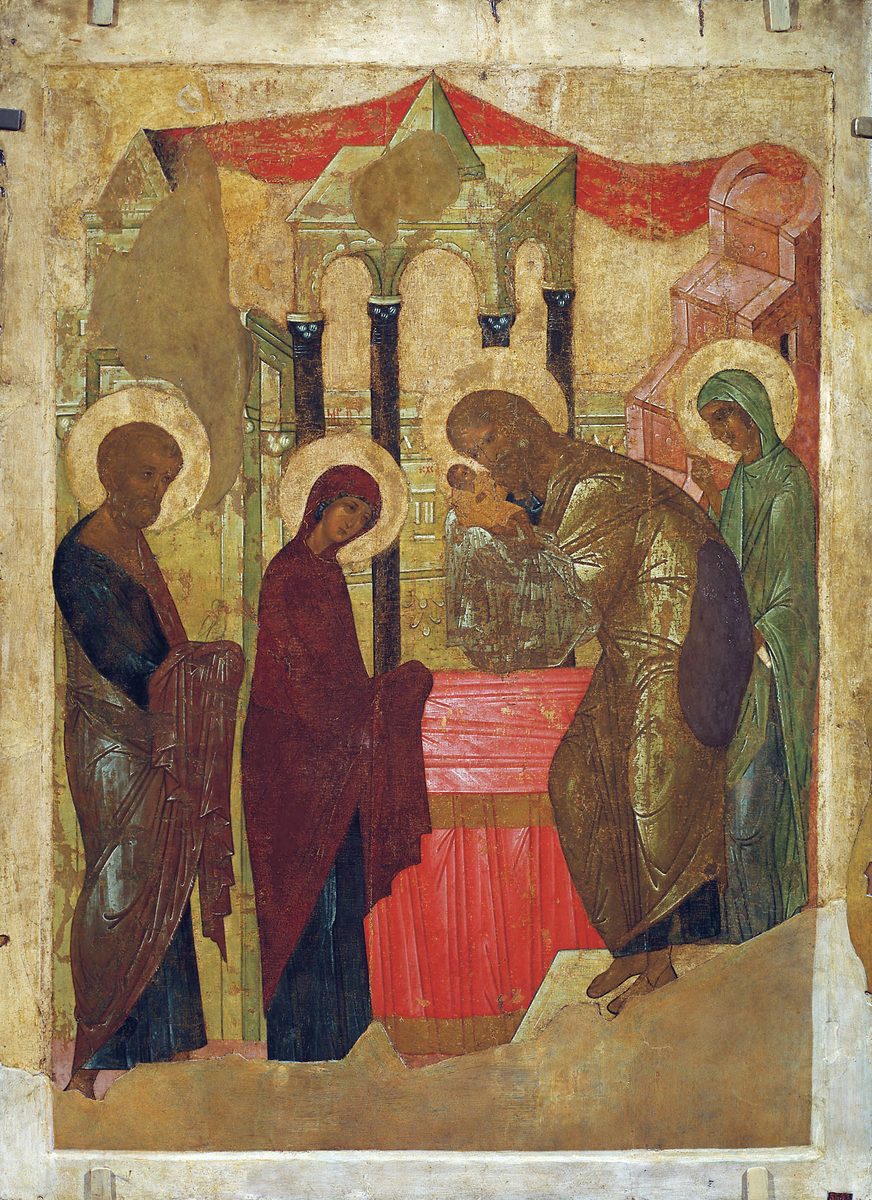
The elder Simeon had been promised by the Holy Spirit that he would not die before seeing the Messiah. When Mary and Joseph brought the infant Jesus to the Temple, Simeon took him in his arms and spoke these words. At Vespers, we become Simeon, beholding Christ in prayer and then released in peace.
The Dismissal
The blessing and the sending forthDeacon (Priest): Wisdom.
R. Father, bless.
Priest: Blessed be He Who Is, Christ our God, always, now and ever and unto ages of ages.
R. Amen. Confirm, O God, the holy Orthodox faith of Orthodox Christians, unto ages of ages.
Priest: Most holy Theotokos, save us.
R. More honorable than the Cherubim, and more glorious beyond compare than the Seraphim, without corruption thou gavest birth to God the Word: true Theotokos, we magnify thee.
Priest: Glory to Thee, O Christ our God and our hope, glory to Thee.
R. Glory to the Father, and to the Son, and to the Holy Spirit, now and ever and unto ages of ages. Amen. Lord, have mercy. (thrice) Father, bless.
The priest pronounces the appropriate Dismissal, after which the choir responds:
R. Amen.
✝
The faithful are dismissed in peaceThe evening service ends, but the day of the Lord continues. At Saturday Great Vespers, the Sunday Resurrection has already begun. The faithful depart carrying the grace of the evening prayer into the night, and will return in the morning to complete the celebration with the Divine Liturgy.
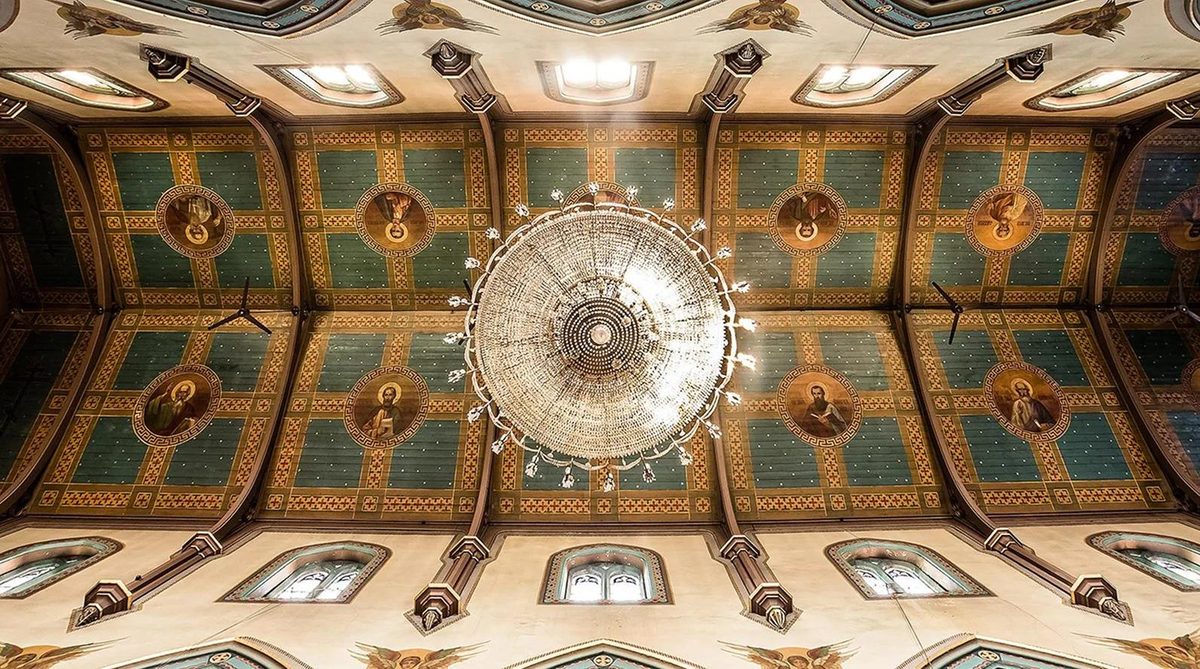
Great Vespers is celebrated every Saturday at 5:00 PM at Saints Peter and Paul Orthodox Cathedral, 109 Grand Street, Jersey City. All are welcome to attend.